Campervan hire Australia
Campervan hire Australia
How to choose a van, compare rental terms, avoid expensive surprises, and book the right campervan for your route.
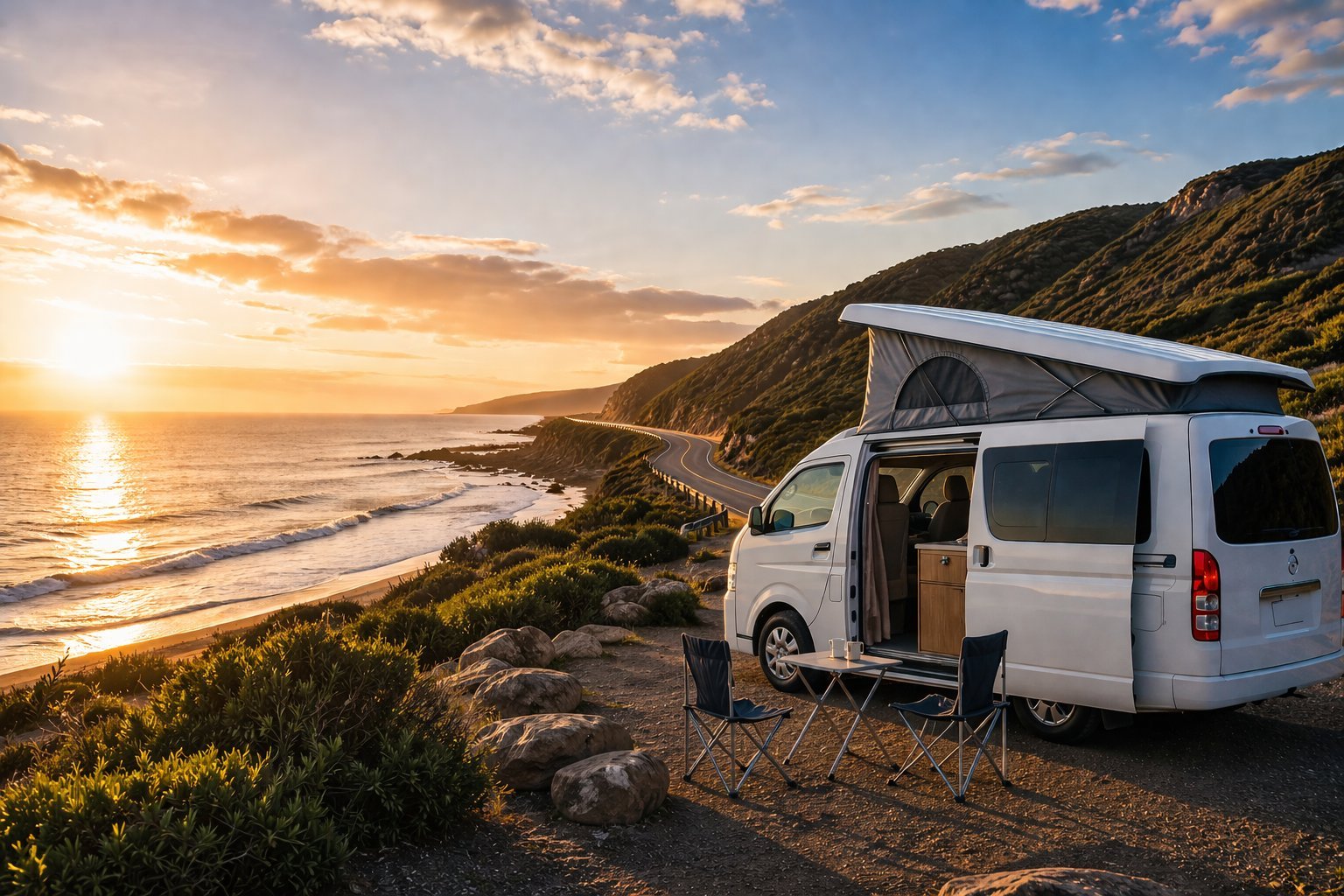
What type of campervan should you hire?
For most first-time travellers, a 2WD campervan is enough for the east coast, Tasmania, the Great Ocean Road, south-west Western Australia, and most sealed national park access roads. Choose a small van if you want easy parking and lower fuel use. Choose a high-top or motorhome if you want to stand inside, cook comfortably, and travel in cooler weather. A 4WD camper is only worth the extra cost if your route genuinely needs it, such as parts of the Kimberley, Cape York, deep Kakadu tracks, or remote gravel roads allowed by the rental contract.
Where to pick up and drop off
The biggest campervan hire cities are Sydney, Melbourne, Brisbane, Cairns, Perth, Adelaide, Hobart, Darwin, and Alice Springs. One-way rentals are common, but they can add large fees, especially in peak season or on routes where companies need vans moved back. Sydney to Cairns, Melbourne to Adelaide, Perth to Broome, and Darwin to Alice Springs are popular one-way routes. Always compare the full route cost, not just the daily hire price.
Insurance and bond traps
The cheapest quote often carries the highest bond. Read the excess, bond, windscreen cover, tyre cover, underbody exclusion, single-vehicle accident clause, and unsealed-road rule. A van that looks cheaper can become expensive if it excludes the roads you actually plan to drive. If you use third-party excess cover, make sure you still have enough credit card limit for the rental bond.
Before you leave the depot
Photograph every panel, wheel, tyre, windscreen chip, interior mark, gas bottle, awning, and roof area. Test the fridge, water pump, stove, lights, USB ports, house battery, and grey-water setup before leaving. Ask where the jack, hose, power cable, levelling blocks, and dump-point hose are stored. A calm depot check can save days of frustration later.
When to book campervan hire in Australia
Book early for Christmas, New Year, Easter, school holidays, Tasmania in summer, Darwin and Broome in the dry season, and one-way routes such as Perth to Broome or Darwin to Alice Springs. Six months ahead is sensible for peak periods. Outside peak times, one to three months can be enough, but the cheapest vans and best layouts still disappear first. Last-minute relocation deals can be excellent if your dates are flexible, but they are not a reliable plan for a first Australia road trip. A relocation usually gives you a fixed route, limited days, mileage limits, and sometimes a small fuel allowance. It can work for a fast drive between cities, but it rarely suits a slow holiday with national parks, beaches, and free camping stops.
Vehicle classes explained
Australian campervan hire companies use different names for similar vehicles, so compare the layout rather than the label. A budget sleepervan is usually a small people-mover or compact van with a fold-out bed and basic cooking gear. It is cheap, easy to park, and fine for warm coastal trips, but it can feel cramped in bad weather. A 2-berth high-top gives standing room, better storage, and a more comfortable kitchen setup. A 4-berth or 6-berth motorhome suits families or travellers who want an indoor toilet and shower, but it uses more fuel, costs more on ferries, and can be awkward in small beach towns. A 4WD camper opens more remote routes, but only if the rental agreement allows the roads you plan to drive.
Match the van to the route
The right van depends on the route. For Sydney to Brisbane, Great Ocean Road, Tasmania, south-west Western Australia, and most sealed east coast trips, a standard 2WD van is normally enough. For Perth to Broome, a 2WD can follow the sealed highway and visit many major stops, but Karijini side roads, beach tracks, and remote camps need careful contract checks. For the Red Centre, a 2WD reaches Uluru, Kings Canyon via sealed roads, Alice Springs, and the West MacDonnell Ranges, but not every shortcut or gravel access road. For Cape York, Gibb River Road, deep Kakadu tracks, or beach driving, hire a proper 4WD camper and read the exclusions. Do not pay for 4WD just because it looks adventurous. Pay for it when the route actually needs it.
What should be included
A good campervan hire quote should make inclusions clear. Check bedding, towels, kitchen kit, camp chairs, table, gas bottle, hose, power lead, spare tyre, roadside assistance, extra driver, and mileage allowance. Some cheap quotes look good until bedding, kitchen gear, child seats, snow chains, one-way fees, and insurance upgrades are added. Unlimited kilometres are useful for long routes, but read the fair-use rules. If kilometres are capped, calculate your full route with detours, grocery runs, campground access roads, and backtracking. For remote trips, ask about tyre age, spare tyre condition, and whether a second spare is available.
Hidden costs to compare
The daily rate is only part of campervan hire Australia pricing. Add insurance reduction, bond hold, one-way fee, young driver fee, extra driver fee, cleaning fee, gas refill, linen pack, camping table and chairs, toll admin fees, after-hours pickup, late return, ferry permission, and card surcharges. Fuel is usually the biggest running cost after hire. Paid caravan parks near cities and beach towns can cost more than expected, especially for powered sites. National park campgrounds and free camps reduce the budget, but they may require advance bookings or a self-contained vehicle. Compare total trip cost, not just the headline daily hire rate.
Insurance choices in plain English
Most rentals include basic cover with a large excess. That means you are covered for major insured damage, but you may be liable for a high amount before insurance pays. Excess reduction lowers that liability but increases the daily price. Third-party travel insurance can reimburse the excess, but the rental company may still place a large bond hold on your credit card. Tyres, windscreens, roof damage, underbody damage, water damage, wrong fuel, lost keys, single-vehicle accidents, and unsealed-road damage may be excluded even when you buy extra cover. Read exclusions slowly. The question is not only what is insured, but what is never insured.
Pickup day checklist
Do not rush pickup day. Allow at least one hour at the depot, more if this is your first campervan. Check that names, dates, drop-off city, insurance level, mileage, and road restrictions match your booking. Ask staff to demonstrate the bed, table, fridge, stove, gas, water pump, battery monitor, mains power, awning, toilet cassette if fitted, and grey-water setup. Confirm what fuel level and gas level must be returned. Save the roadside assistance number offline. Before driving away, sit in the driver seat and adjust mirrors, lights, wipers, handbrake, reverse camera, and navigation. It is much easier to ask questions at the depot than in a windy campground at night.
Common booking mistakes
The most common mistake is hiring too large a vehicle for a city-heavy trip or too basic a van for a cold, wet, or long trip. The second mistake is planning mainland distances as if every road were a motorway. The third is ignoring one-way fees, ferry costs, and campground availability until after the booking is paid. Avoid tight first and last days. Do not pick up a van after a long-haul flight and drive several hours straight away. Do not plan to return the van on the same morning as an international flight unless the depot is close, open early, and you have allowed time for fuel, cleaning, traffic, and inspection.
A good first-day plan
Keep the first day deliberately easy. Pick up the van, buy groceries, learn where everything is stored, and drive no more than one or two hours to a booked campground. This gives you daylight to make the bed, test the kitchen, plug into power if needed, and notice any small problem while you are still close enough to the depot or a major town to fix it.