Free camping Australia
Free camping Australia guide
Where free camping is legal, how to find good sites, and how to avoid fines or messy campsite mistakes.
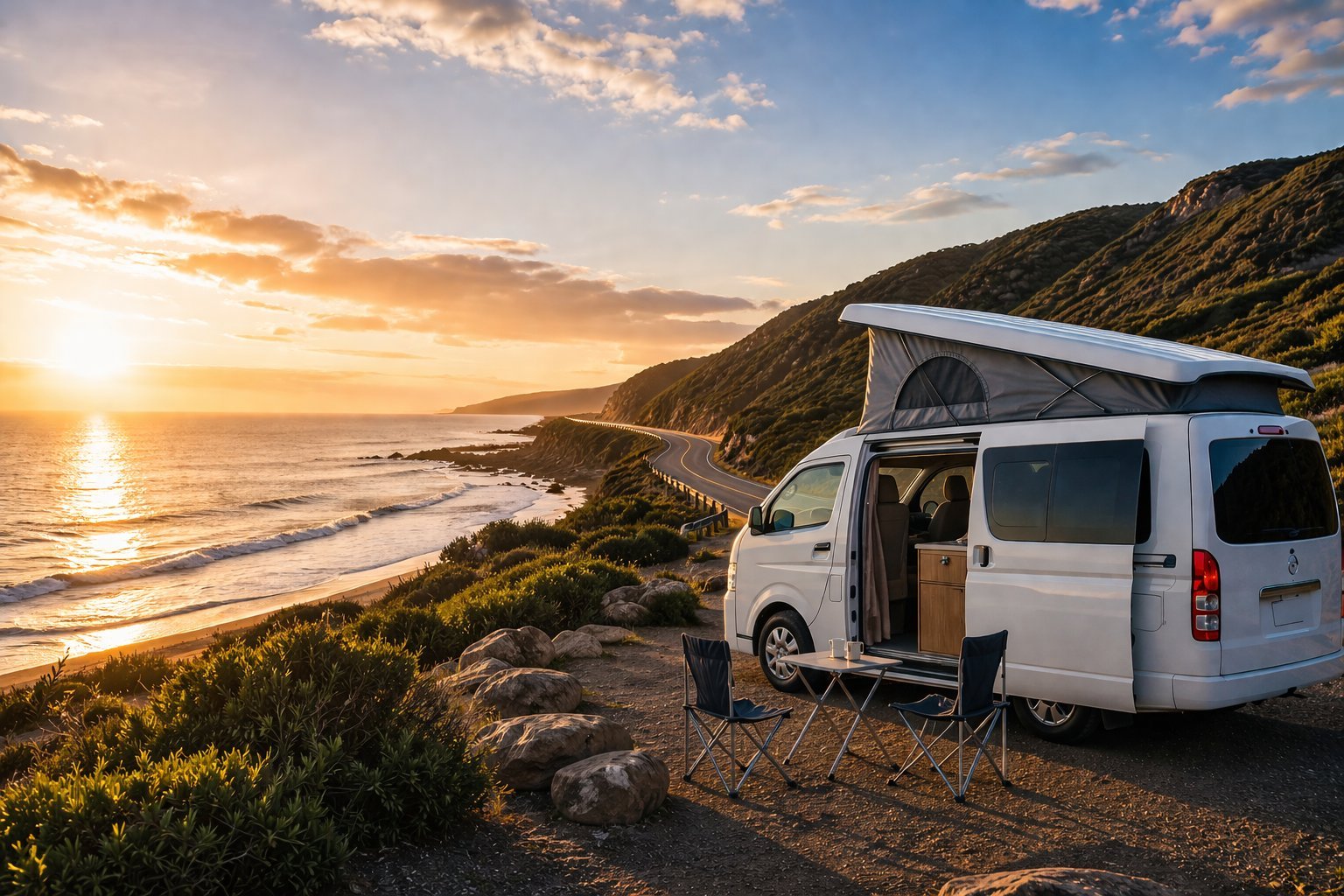
What “free camping” actually includes
The phrase covers several different land uses: a designated free campground, a low-cost council camp, a showground that accepts travellers, a state-forest campsite, a roadside rest area and an informal stop that may not be legal at all. These are not interchangeable. An official campground invites camping. A rest area exists primarily to manage driver fatigue. A beach or town car park may prohibit sleeping in a vehicle even when there is no gate.
Resting is not the same as camping
If fatigue makes driving unsafe, stop and rest. That safety need does not create a general right to turn a rest area into a campsite. Service NSW states that NSW rest areas are for rest, not camping; Queensland uses signs that may set a maximum stay or prohibit overnight camping; Main Roads WA describes rest areas as short-stay facilities rather than places for extended camping. Chairs, awnings, cooking outside, washing lines and several nights in one place make a vehicle look like a camp rather than a fatigue stop.
Council and land-manager rules come first
Australia has no single nationwide permission to sleep in any parked vehicle. Councils can regulate overnight stays on their land, parks agencies control national-park camping, road authorities manage rest areas and private land requires the owner’s permission. Read signs at every entrance and parking bay. If an app conflicts with an official sign or council page, follow the official rule. A listing that was legal last season may be closed, time-limited or restricted to self-contained vehicles today.
State-by-state planning overview
In New South Wales, use official campgrounds or state-forest sites and treat highway rest areas as fatigue stops unless current signs explicitly allow otherwise. Queensland rest areas can display either maximum-stay or no-overnight notices. Victoria, Tasmania and South Australia rely heavily on parks, councils and signed local facilities. Western Australia and the Northern Territory have long remote corridors where designated rest areas are essential for safety, but they are still not a licence for extended stays. Always check the exact site, not a state-level generalisation.
New South Wales and the ACT
In NSW, start with NSW National Parks, Forestry Corporation campgrounds, council listings and signed road-authority rest areas. A rest area is for managing fatigue, not an assumed holiday campsite. The ACT has a small land area and stronger urban controls, so use designated campgrounds or accommodation rather than searching suburban car parks. In both jurisdictions, check fire, flood and park alerts as well as the site rule.
Queensland
Queensland combines busy coastal councils with very remote highways. A lawful stop in one shire does not establish a rule for the next. Read roadside service signs for maximum stays and camping restrictions, and use Queensland Parks information for protected areas. Tropical rain, cyclones, flooding and fire conditions can close access. Along remote routes, separate the safe need to rest from setting up an extended camp.
Victoria, Tasmania and South Australia
These states offer council facilities, showgrounds, national parks, forests and low-cost camps, but the rules remain site-specific. Coastal towns may restrict overnight vehicle stays precisely where demand is highest. National-park camping normally belongs in designated areas and may require booking or payment. Tasmania ferry arrivals and popular summer routes create pressure on camps, while South Australian heat and fire restrictions can change an otherwise simple inland plan.
Western Australia and the Northern Territory
Long distances make signed rest opportunities important, but road-authority facilities are not a general substitute for campgrounds. Identify approved overnight options, fuel and water before leaving a major town. Wet-season closures, floodways, extreme heat, truck traffic and limited communications raise the consequence of a poor choice. Do not drive farther merely to avoid a modest legal campsite fee when fatigue is already affecting the journey.
Vehicle type and self-contained rules
Some facilities accept only self-contained motorhomes or caravans and may define that term through local conditions. A bed in a car does not automatically qualify. Look for requirements covering an onboard toilet, fresh water, wastewater storage and rubbish. Never claim facilities the vehicle does not have. If the sign or booking page excludes tents, cars, trailers, pets or generators, choose another site.
Free camps, showgrounds and roadside stops
A designated free camp normally states who may stay, the time limit and whether tents, caravans or self-contained vehicles are accepted. Showgrounds often charge a modest fee and may close for events. State forests can have different rules from national parks. Informal roadside clearings are the riskiest choice: they may be private land, a truck bay, a fire-access track, culturally sensitive land or an unsafe floodway. Never block gates, stock routes or heavy-vehicle access.
How to read prohibition signs
Treat “No camping”, “No overnight stays”, “Day use only”, closing-time signs and gates as clear instructions. A parking sign without a camping symbol does not automatically allow sleeping. Maximum-stay signs are limits, not guaranteed entitlements, and other conditions may still apply. If wording is unclear, search the council or land-manager page or call the visitor centre before settling in. Do not rely on another vehicle already being present.
Toilets, water, rubbish and dump points
Assume a free site provides nothing unless the official listing says otherwise. Tank or bore water may be untreated; carry drinking water. Never empty toilet cassettes or grey water into toilets, drains, bushland or waterways—use a signed dump point. Pack out rubbish when bins are absent or full. Keep toilet chemicals compatible with the dump point, and do not wash dishes or shower where runoff reaches creeks or other camps.
Using WikiCamps, CamperMate and official resources
Apps are excellent discovery tools, not legal authorities. Filter for the correct vehicle type, read several recent reviews and note reports of changed signs, ranger visits, road damage, noise and seasonal closure. Then verify through the council, parks service, road authority, showground or visitor centre. Save the official page and a backup site before losing reception. A screenshot of an old app entry will not override a sign.
Fire restrictions and seasonal closures
Total fire bans, park fire bans and local restrictions can prohibit all solid-fuel fires even where a fire ring exists. Gas appliances can also be restricted under severe conditions. Floods, cyclones, bushfires and wet-season road damage can close camps with little notice. Check the Bureau of Meteorology plus the relevant state emergency and parks alerts before leaving coverage, and never drive around a closure barrier.
Remote-area safety
Arrive in daylight and assess flood debris, falling branches, soft ground, fire history, traffic separation and mobile coverage. Carry enough water, food and medication for delays, tell someone the route and avoid dry creek beds or road drains. Do not occupy truck-only bays; heavy-vehicle drivers need them for regulated rest. In very remote country, a personal locator beacon or satellite communicator is a safety tool, not a substitute for route planning.
Common enforcement situations
Travellers are most likely to be moved on or penalised when they ignore a no-camping sign, remain beyond a signed limit, sleep in a prohibited beach or town car park, light a fire during restrictions, dump waste, camp outside a designated national-park area or create a full campsite in a rest area. Penalties vary by authority and can change, so this guide does not quote a universal fine. Compliance is simpler: use an approved site and keep proof of any booking or permit.
Responsible free-camping principles
Use the smallest practical footprint, keep noise and lights low, control pets where permitted, avoid generators near others, leave vegetation and firewood untouched and depart early from fatigue-rest areas. Buy fuel or food in nearby towns when possible. If a site is crowded, muddy or already under pressure, use the backup. Responsible travellers protect access by making the land manager’s job easier, not by testing the edge of every rule.
Examples without a promise of availability
Signed state-forest campgrounds, council RV stops, participating showgrounds and designated highway facilities can all be suitable when their current listing accepts your vehicle. Bodalla State Forest in NSW, for example, is officially described as a free overnight option, but even named examples must be rechecked for closures, fires, event use and changed conditions before arrival. Plan categories and verification steps, not a permanent list copied from an old blog.